

Open Source Security Without the Triage
Open source security fails when legacy SCA tools bury engineers in unexploitable CVE alerts; Kodem uses runtime intelligence to surface only the dependencies attackers can actually reach.
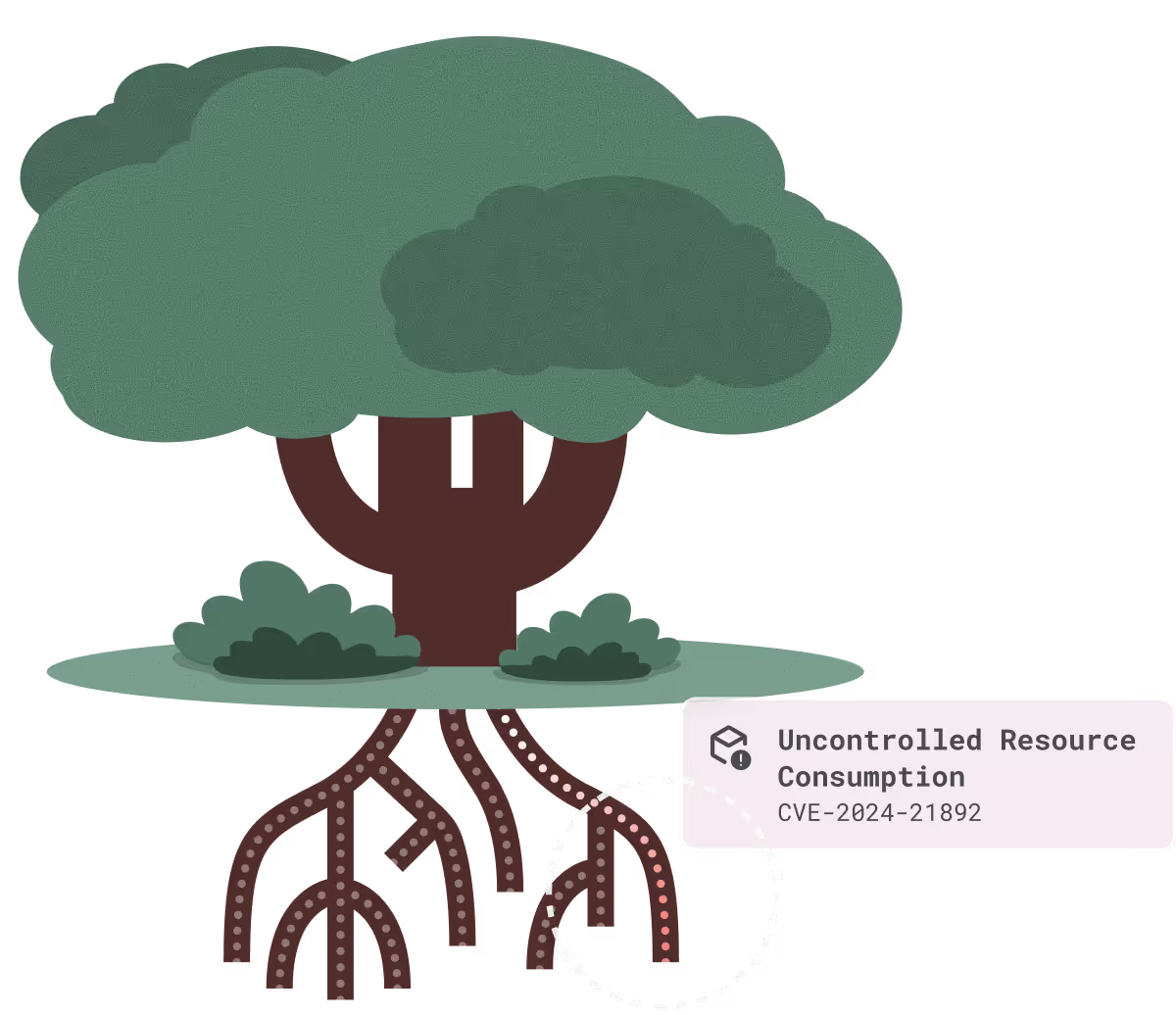

Why Legacy SCA Tools Bury You in Open Source CVE Alerts
Code inspection
Legacy SCA tools only inspect code and miss transitive, OS dependencies and more.
CVE Alert generation
They generate thousands of direct dependency CVE alerts.
Time waste
Engineers waste time triaging unexploitable risks.
How Runtime-Powered SCA Finds Exploitable Open Source Risk
Runtime Usage
Runtime usage mapping to show which packages/functions execute in production.
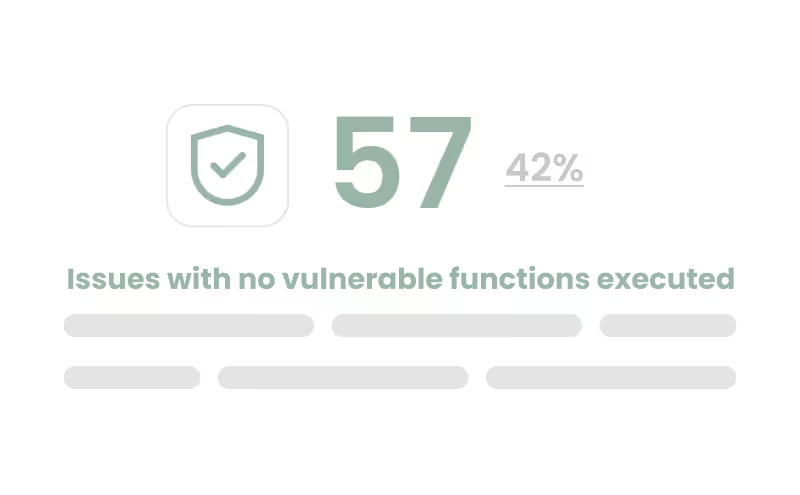
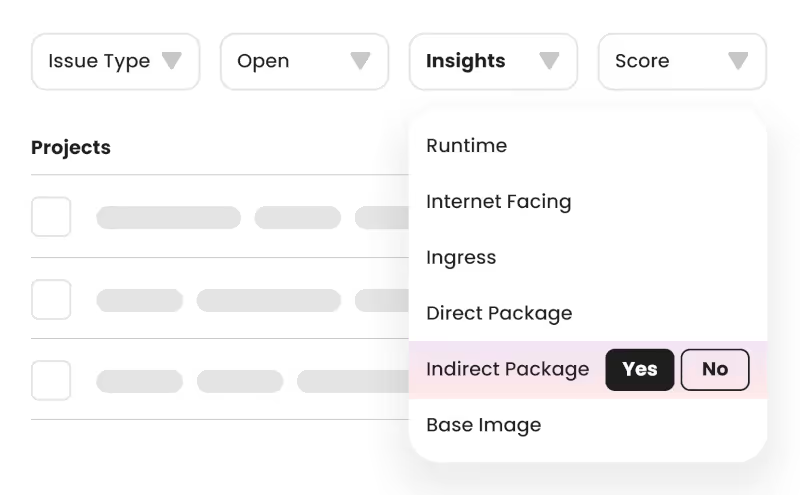
Transitive & OS
Transitive + OS dependency tracing across hidden layers and base images.
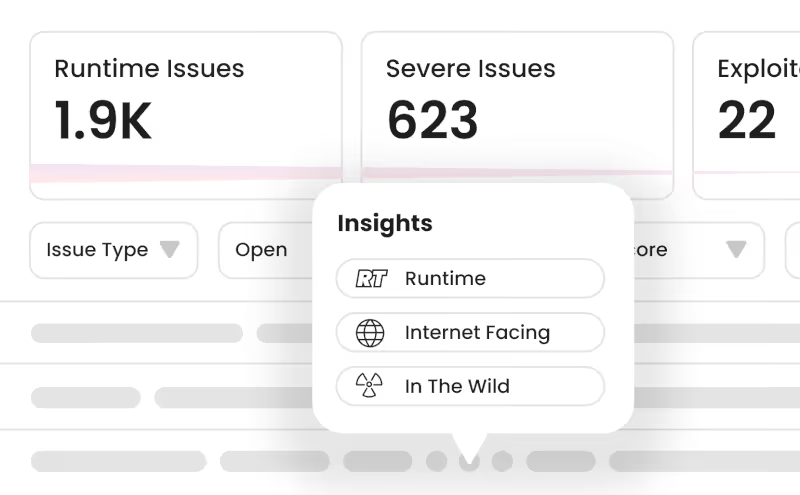
Exploit
Exploit intelligence to highlight only attacker-relevant CVEs.
Licensing
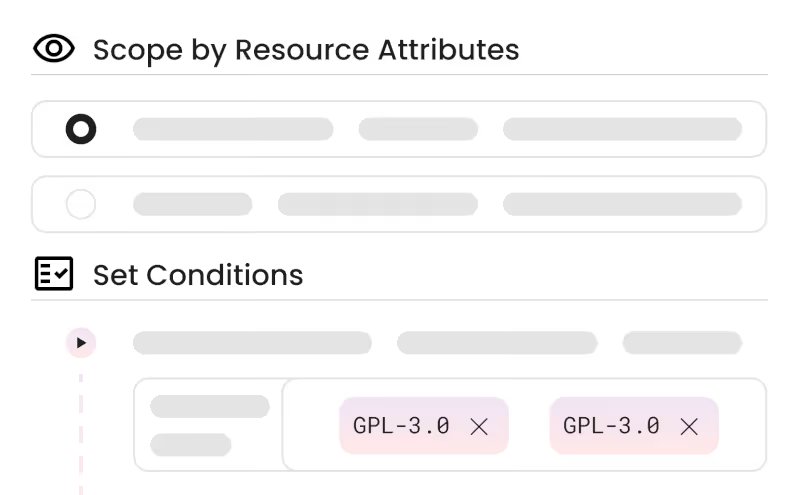
Open Source License Compliance and Enforcement
What is open source security?
Open source security is the practice of finding and fixing vulnerabilities in the open source packages your application depends on, across direct, transitive, and operating system dependencies. Legacy SCA tools flag every known CVE, which buries engineers in alerts for code that never runs. Runtime intelligence narrows the list to the open source vulnerabilities attackers can actually reach, so you fix exploitable risk instead of theoretical risk.
Trusted by










What is open source security?
Open source security covers the detection, prioritization, and remediation of vulnerabilities in the third-party and open source components inside your software. Because most modern applications are largely open source code, it focuses on direct, transitive, and OS-level dependencies, and on whether a known CVE is actually reachable at runtime.
Why do legacy SCA tools create so much noise?
Traditional software composition analysis tools alert on every known CVE in your dependency tree, whether or not that code ever executes. The majority of flagged vulnerabilities are never loaded into memory, so teams spend weeks triaging open source CVEs that pose no real exploit risk.
What does runtime reachability mean for open source vulnerabilities?
Reachability tells you whether a vulnerable function in an open source dependency is actually loaded and executed by your application. Kodem maps runtime usage to separate exploitable open source risk from dormant CVEs, which lets engineers fix the small set of issues attackers could reach.
Does Kodem cover transitive and OS-level dependencies?
Yes. Kodem analyzes direct dependencies, transitive dependencies several layers deep, and operating system packages inside your containers. It validates which of those components run at runtime, so open source risk is prioritized by real usage rather than by where the dependency sits in the tree.
Can Kodem handle open source license compliance?
Yes. Alongside vulnerability detection, Kodem inventories the licenses attached to your open source dependencies and flags obligations or conflicts that create legal and compliance risk. That gives security and legal teams one source of truth for both exploitable CVEs and license enforcement.
Open source security should surface only the risk attackers can reach
With Kodem, your open source security backlog reflects reality. The hundreds of CVEs a legacy scanner would flag collapse into the few that actually load and run, ranked by exploitability across direct, transitive, and OS dependencies. Engineers stop triaging unreachable vulnerabilities, license obligations show up in the same view, and remediation finally tracks real exposure instead of theoretical noise.
OpenSSL CVE-2022-3602: Legacy tools flagged all images with OpenSSL
Kodem showed only one service where the vulnerable function was actually reachable.
"We uncovered every attack scenario our past SAST and SCA tools missed and eliminated a seven-figure risk before it hit production."
