Vulnerability Alert: CVE-2025-25257: Pre-Auth SQL Injection to Full RCE in Fortinet FortiWeb Fabric Connector
Published July 2025 | CVSS: 9.8 (Critical)


The Problem: SQL Injection That Doesn’t Stop at SQL
CVE-2025-25257 is a critical vulnerability in Fortinet FortiWeb Fabric Connector. It allows unauthenticated SQL injection, which attackers escalate into remote code execution (RCE) on affected appliances.
- Why it matters: This isn’t your typical database exfiltration. Here, the injected SQL statements pivot directly into OS-level command execution.
- Impact: Attackers can achieve root-level access to the appliance with a single crafted HTTP request.
- Exploitation timeline: Public exploit code is already available; scanning activity started within 24 hours of disclosure.
Attack Breakdown
The vulnerability resides in the Fabric Connector’s pre-auth code path, where user-controlled parameters are interpolated directly into SQL queries without sanitization.
Example attack pattern (simplified):
POST /api/v2/cmdb/system/fabric/connector HTTP/1.1
Host: target.com
Content-Type: application/json

{
  "name": "exploit",
  "type": "generic",
  "description": "'; SELECT pg_sleep(5)--"
}
Step by step:
- Unauthenticated request hits the Fabric Connector endpoint.
- SQL injection executes inside the backend database.
Attackers chain the injection to drop into system commands via database functions → remote shell.
Who is at Risk
- Fortinet FortiWeb appliances running vulnerable Fabric Connector code.
- Internet-exposed FortiWeb instances are at highest risk, particularly where Fabric integration features are enabled.
Recommended Actions for AppSec Teams
Priority 1
- Patch immediately to the fixed release provided by Fortinet.
- Block Fabric Connector endpoints at the network edge if patching takes time.
Priority 2
- Search inventories for FortiWeb components, both physical and virtual appliances.
- Review logs for:
- Delays caused by
pg_sleepor similar DB timing functions. - Unusual connector configuration changes.
- Delays caused by
Priority 3
- If Fabric Connector isn’t required, disable it until fully patched.
- Restrict management plane access to trusted networks.
Incident Response Checklist
- Contain: Isolate compromised appliances. Snapshot storage for forensics.
- Investigate:
- Check for commands executed via database function abuse.
- Look for persistence (cron jobs, systemd services) on the FortiWeb OS.
- Check for commands executed via database function abuse.
- Eradicate & Recover: Rebuild from a clean firmware image. Apply latest patches.
- Hunt for Indicators: Identify abnormal SQL queries or shell execution patterns linked to Fabric Connector API calls.
How Kodem Protects Customers
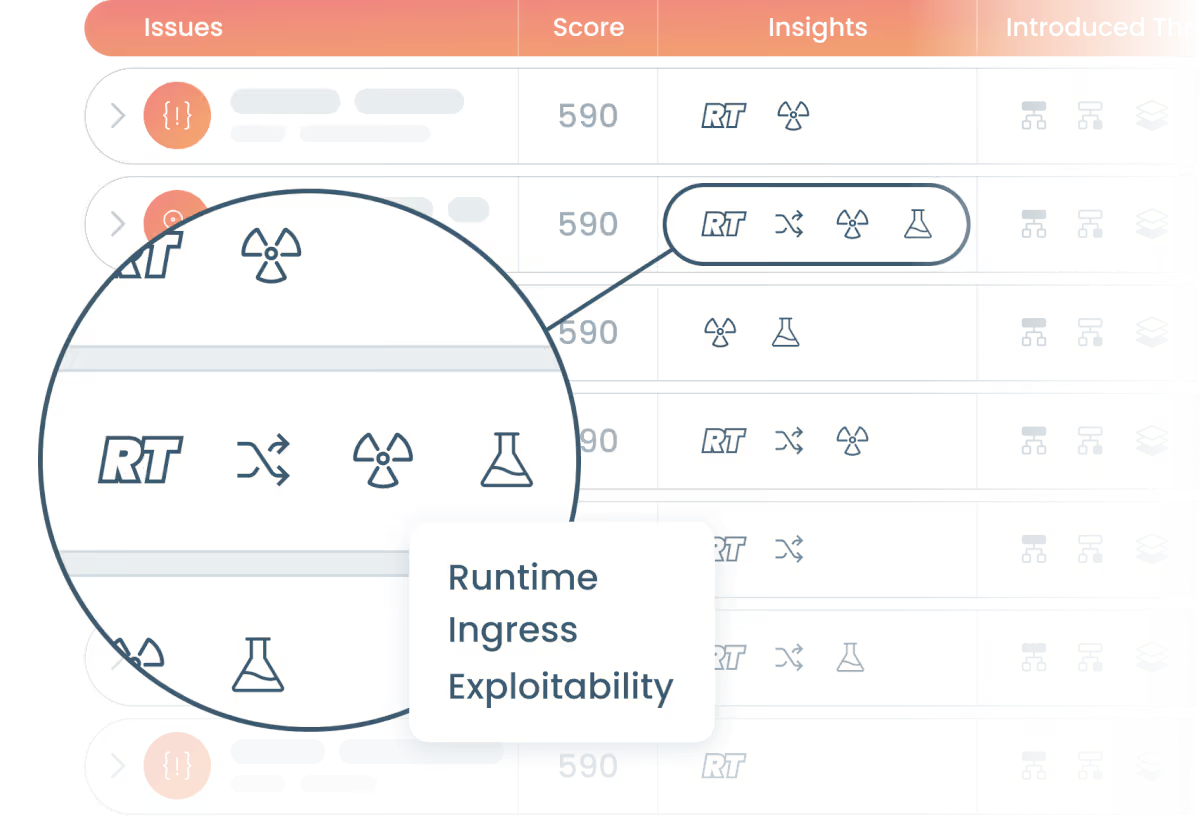
- Kodem SCA instantly identifies:
- Where the vulnerable FortiWeb package exists.
- Where it’s actively running in production.
- Which instances are reachable and exploitable from the internet.
- Where the vulnerable FortiWeb package exists.
- Runtime defense: Our exploit trigger detection (eBPF + memory introspection) catches command execution chains initiated from SQL injection payloads.
- Attack path intelligence: Kodem correlates the original HTTP request with downstream DB function calls and resulting shell execution, giving security teams full visibility.
- Exploitation attempts flagged in near real-time, mitigation applied, and future exploit activity continuously monitored.
Key Takeaways
- Pre-auth vulnerabilities remain the fastest path to full compromise.
- SQL injection is not just about data theft anymore—it’s a delivery vehicle for remote shells.
- Traditional scanners stop at “SQL injection detected.” Modern security requires runtime exploit detection and attack path analysis.
Reality check
If you only see SQL queries in a report, you’re missing the system compromise happening seconds later.
References
- Ampcus Cyber. (2025, July). Pre-Auth SQL Injection in FortiWeb Fabric Connector Enables Full RCE. Retrieved from https://www.ampcuscyber.com/shadowopsintel/pre-auth-sql-injection-in-fortiweb-fabric-connector-enables-full-rce/
- SOC Prime. (2025, July). CVE-2025-25257 SQL Injection Vulnerability. Retrieved from https://socprime.com/blog/cve-2025-25257-sql-injection-vulnerability/
- WatchTowr Labs. (2025, July). Pre-Auth SQL Injection to RCE in Fortinet FortiWeb Fabric Connector. Retrieved from https://labs.watchtowr.com/pre-auth-sql-injection-to-rce-fortinet-fortiweb-fabric-connector-cve-2025-25257/
Related blogs
Mastra npm Packages Compromised: easy-day-js Supply Chain Attack
On June 17, 2026, attackers republished 13 @mastra npm packages with a malicious easy-day-js dropper that steals secrets. Get the IOCs, timeline, and first-hour runbook.
9


A Primer on Runtime Intelligence
See how Kodem's cutting-edge sensor technology revolutionizes application monitoring at the kernel level.
Platform Overview Video
Watch our short platform overview video to see how Kodem discovers real security risks in your code at runtime.
The State of the Application Security Workflow
This report aims to equip readers with actionable insights that can help future-proof their security programs. Kodem, the publisher of this report, purpose built a platform that bridges these gaps by unifying shift-left strategies with runtime monitoring and protection.
.avif)
Get real-time insights across the full stack…code, containers, OS, and memory
Watch how Kodem’s runtime security platform detects and blocks attacks before they cause damage. No guesswork. Just precise, automated protection.